
Summary
- AI will automate lead qualification, personalization, pricing, and virtual experiences — freeing salespeople from repetitive tasks but raising expectations for human skills like negotiation and finance advising.
- AI features are becoming standard in CRMs, phone/virtual agents, and inventory platforms — get your tech integrated now.
- Buyers will expect virtual showrooms, voice-first in-car experiences, and near-instant trade valuations; sell around those expectations.
- Practical steps: connect chat/phone to CRM, pilot lead-scoring, create digital demo assets, and train reps on data-driven selling.
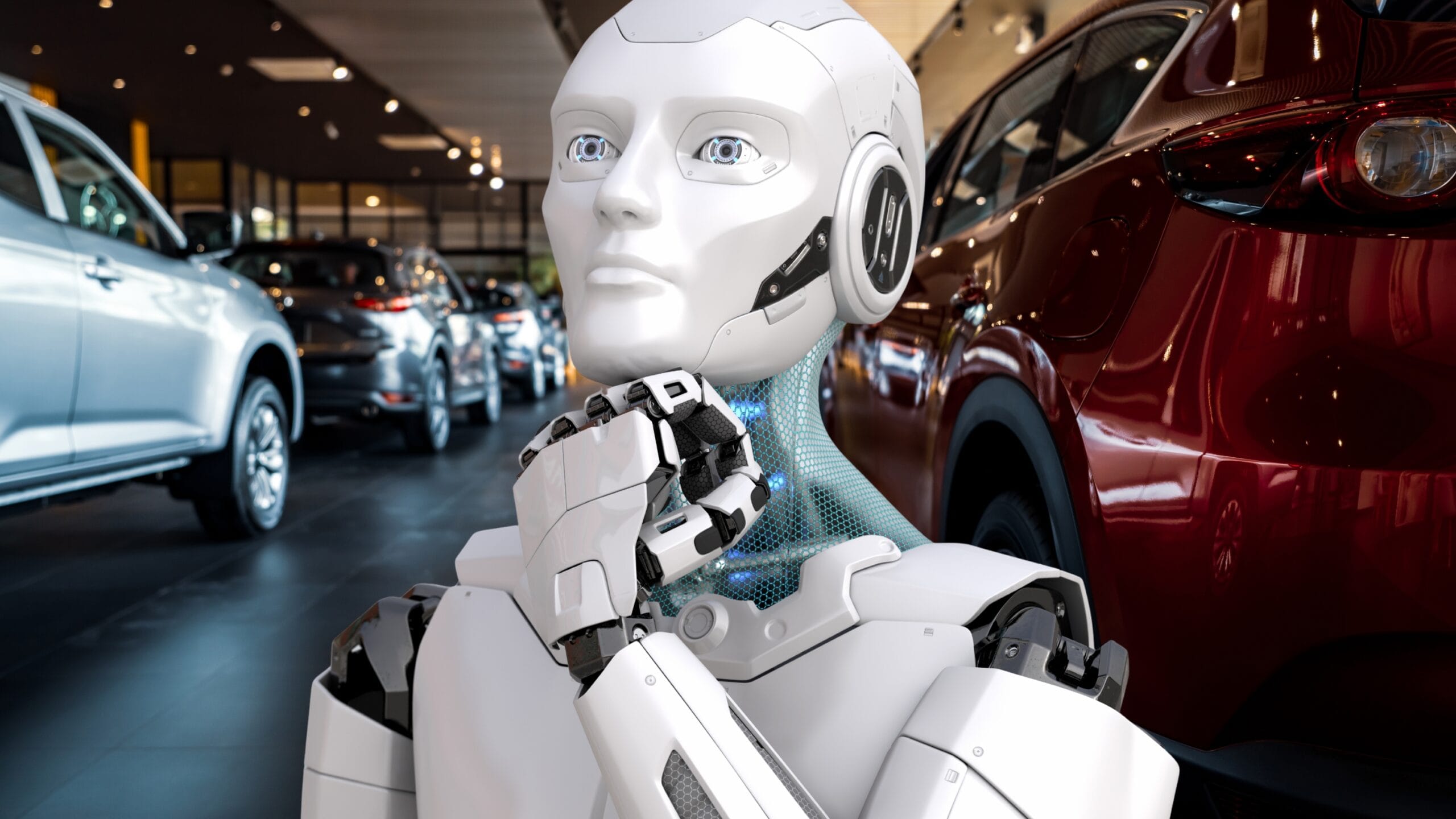
Artificial Intelligence is rewriting the rules of the car business — from how leads are captured and priced to how customers shop, test drive, and negotiate. By 2026, every dealership will be powered by smart CRMs, AI-driven pricing tools, and virtual showrooms. But the real winners won’t be the machines — they’ll be the human pros who learn to use them. This in-depth guide explores the biggest changes coming to automotive sales, what new tools are transforming the trade, and how car salespeople can future-proof their careers in an AI-driven world.
Why 2026 is a tipping point
By 2026, advances in conversational and generative AI — integrated into CRMs, phone systems, and vehicle software — make it possible for systems to understand intent, summarize conversations, predict buyer behavior, auto-create personalized offers, and run immersive product demos. These capabilities are not only available as standalone tools; they’re being embedded into dealer and OEM workflows, multiplying their impact across the sales lifecycle.
How AI will change each stage of the car-sales funnel
1) Lead capture & qualification
What changes:
- 24/7 automated triage: chatbots and phone-AI qualify leads, schedule appointments, and hand warm leads to salespeople.
- Smart lead scoring: models combine online behavior, conversational cues, and historical conversion data to prioritize outreach.
What to do:
- Connect website chat and phone AI to your CRM so every interaction updates the lead profile.
- Use AI lead scores to prioritize outreach—treat high scores as top priority and set SLAs for response times.
2) Discovery & digital engagement
What changes:
- Personalization at scale: AI creates tailored content (short videos, spec sheets, and trade-in offers) for each buyer.
- Virtual showrooms and AR configurators reduce the need for physical visits while increasing conversion for qualified buyers.
What to do:
- Build a digital-first demo kit: 360° photos, 60–90 second walkthrough videos, and pre-built calculators that you can text or deliver in-chat.
- Practice hybrid demos (you on video, guiding a buyer through a virtual showroom); turn the virtual walkthrough into your high-conversion asset.
3) Pricing, trade-ins, and appraisal
What changes:
- Dynamic pricing and instant trade valuations: AI uses market data, local supply/demand, and VIN history for real-time recommendations.
- Image-based damage estimating: buyers upload photos for near-instant condition and repair estimates used for trade-in offers.
What to do:
- Create internal guardrails for AI-recommended prices (floor/ceiling rules and margin thresholds).
- Explain valuations transparently to customers: “We used market data and your car’s photos to produce this estimate.”
4) Negotiation & closing
What changes:
- AI-assisted negotiations: tools suggest trade-offs (e.g., warranty vs. APR) and auto-fill contract data to speed closing.
- More online closings: e-signature, remote identity verification, and automated paperwork reduce in-person time.
What to do:
- Use AI suggestions as guidance — your role is to present options, explain trade-offs, and secure the sale by building trust.
- Master e-sign, identity verification, and digital funding flows to eliminate friction at the finish line.
5) Retention, service, and aftermarket
What changes:
- Predictive service reminders: AI will forecast maintenance windows and trigger personalized service outreach.
- Smart re-engagement: AI sequences will surface trade-up offers at precisely the right time in a customer’s ownership cycle.
What to do:
- Treat service interactions as CRM events so AI can build lifetime-value models around each customer.
- Train service staff to message- and cross-sell consistently with the sales team.
Tools & platforms you’ll see in every dealership in 2026
- AI-enabled CRMs and DMS that summarize conversations, suggest next actions, and auto-schedule follow-ups.
- Conversational & phone AI capable of multi-turn conversations and human hand-off.
- AR/VR/3D configurators and virtual showrooms embedded into vehicle pages and sales workflows.
- Lead scoring & analytics modules that predict conversion probability and recommend offers.
The human skills that become more valuable (and will keep you employed)
AI handles repetitive work — people who win will master these human strengths:
- Complex negotiation & empathy — reading nuance, negotiating value, and building trust.
- Financial advisory skills — explaining terms, trade-offs, and incentives clearly.
- Digital presentation — being great on camera, writing crisp SMS messages, and running hybrid demos.
- Data literacy — interpreting AI outputs, spotting errors, and making data-backed decisions.
Risks, compliance & ethical issues
- Bias & fairness — automated credit and pricing models must be audited to avoid discriminatory outcomes.
- Privacy & consent — more data means stricter handling, explicit opt-ins, and careful marketing practices.
- Regulatory risk — laws on automated decisions, voice recording, and personal data vary by jurisdiction.
- Customer perception — over-automation can feel cold; keep the human touch for high-stakes parts of the sale.
Practical 90 / 180 / 365-day action plan
First 90 days — foundations
- Audit your tech stack & ensure website chat, phone AI, CRM, and DMS are integrated.
- Pilot one AI-enabled tool (lead scoring or chat automation) with one sales team.
- Train reps to interpret lead scores and escalate warm leads quickly.
- Create three digital demo assets: a 60s exterior tour, a 60s interior walkthrough, and a 2-minute virtual test-drive clip.
90–180 days — scale & standardize
- Roll out lead scoring for all reps and set SLAs (e.g., contact high-score leads within 15 minutes).
- Document a digital sales script for virtual walkthroughs and video demos.
- Implement clear and transparent language for trade-in valuations on your website.
- Train finance managers on AI pricing suggestions and how to explain them to customers.
180–365 days — optimize & measure
- Monitor KPIs monthly: lead-to-appointment time, conversion by lead score, average gross per unit with/without AI pricing.
- Introduce predictive service outreach and retention sequences.
- Audit AI decisions quarterly for fairness and accuracy, and correct bias or model drift.
- Experiment with immersive experiences (AR configurator) for one high-margin model.
Sample KPIs to track
- Lead response time (goal: under 15 minutes for hot leads).
- Conversion rate by AI lead score band.
- Average gross and margin on deals using AI-recommended pricing vs. manual pricing.
- Digital demo → test-drive conversion rate.
- Service retention rates following AI-driven outreach.

Example scripts & tactics (ready-to-use)
SMS after virtual tour (30–60 minutes after demo)
Hey [Name], great to meet you in the virtual tour — based on what you looked at, I found a similar [model, trim] with this trade-in estimate and a finance option that keeps payments under $X. Want to book a quick 15-minute call tonight to go over numbers?
Voicemail after hot lead score (leave within 5–10 minutes)
Hi [Name], this is [Your Name] from [Dealer]. You were looking at [model]. I can hold a car for a test drive this evening — what time works? Reply “EVENING” or call me at [number].
Tech stack recommendations (practical shortlist)
- AI-capable CRM/DMS: choose a vendor that supports AI workflows or that safely integrates with LLMs and analytics tools.
- Conversational/phone AI that stores transcripts in CRM and supports human hand-off.
- Digital retailing tools that integrate finance, trade valuation, and e-sign in one flow.
- AR/3D configurator for high-intent shoppers (mobile-friendly 360° configurators raise conversions).
What dealers SHOULD avoid
- Replacing humans entirely — automation without human oversight damages trust for complex deals.
- Using AI pricing with no guardrails — always set margin thresholds and human review.
- Keeping AI in silos — disconnected chat, CRM, and DMS cause data blindspots and inconsistent customer experiences.
A simple checklist you can implement this week
- Connect website chat to CRM and make sure every chat creates/updates a lead.
- Ask your CRM rep to enable an AI lead-scoring demo or trial.
- Produce a 60s virtual tour video for a flagship model and add it to vehicle pages.
- Create an SLA: hot-score leads are contacted within 15 minutes.
- Hold a 60-minute training with reps on how to use AI scores, respond to AI-handled chats, and run hybrid demos.
Final thoughts — the mindset winners will adopt
AI is an amplifier: it makes excellent sales teams better and exposes gaps in weak processes. The dealers and salespeople who win in 2026 will be those who treat AI as a tool to free time for high-value human work, integrate data and workflows so the customer experience is seamless, and iterate quickly based on metrics and feedback. Start today: pilot intelligently, protect margins, and invest in the human skills AI can’t replace — you’ll be the person customers call when they want advice, not just an algorithm-generated price.

Charles Bivona Jr. aka “Coach JP Money” is a seasoned expert in financial coaching, business strategy, and wealth-building. With a background in accounting and finance from UNLV and Cal State Fullerton, Charles began his journey to financial independence at age 17 with his first real estate investment, purchased with no money down. By 1998, he was completely debt-free and has spent the decades since building wealth and mentoring others to do the same. As an entrepreneur, Charles led multiple national media publications and later founded successful digital ventures such as HireVeterans.com and VT Foreign Policy, demonstrating a sharp instinct for business development in both traditional and online arenas. Today, as Coach JP Money, he is dedicated to helping individuals and small businesses win online and gain financial clarity through real-world strategies and hands-on coaching.